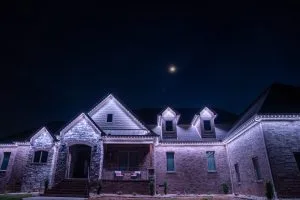
One of the biggest questions homeowners ask before installing permanent holiday lighting is: How much energy do LED house trim lights use? The good news is that LED technology is incredibly efficient compared to traditional incandescent bulbs. Let’s explore energy usage, cost savings, and why LEDs are the go-to choice for year-round lighting.
LED Energy Efficiency vs. Incandescent Lights
LEDs (Light Emitting Diodes) consume up to 80–90% less energy than incandescent bulbs. While an incandescent Christmas light may use around 5–7 watts per bulb, an LED typically uses 0.5 watts or less.
Example Comparison:
- Incandescent C9 bulb string (100 bulbs): ~500–700 watts
- LED C9 bulb string (100 bulbs): ~50 watts
This massive difference translates directly into lower electricity bills.
Average Energy Usage of LED Trim Lights
The actual energy use of LED trim lights depends on how many lights are installed and how long they’re turned on each day.
Typical Breakdown:
- 150 feet of LED house trim lights ≈ 150–200 watts total
- Running 5 hours per night ≈ 1 kWh per day
- Monthly use (30 days) ≈ 30 kWh
With the average electricity cost in the U.S. at about $0.15 per kWh, that’s only around $4.50 per month.
Why LED Trim Lights Save Money
- Low Heat Output: Less wasted energy and safer for home exteriors.
- Long Lifespan: LEDs last up to 50,000 hours, reducing replacement costs.
- Dimming & Scheduling: With smart controls, you can limit usage and save even more.
Environmental Benefits of LED Lights
Switching to LEDs isn’t just good for your wallet—it’s also eco-friendly. Reduced energy consumption means a lower carbon footprint, making LED house trim lights a sustainable choice for long-term use.
Aurora Sky Lighting’s Energy-Saving Installations
At Aurora Sky Lighting, we specialize in installing permanent LED lighting systems that combine beauty and efficiency. Our solutions ensure you enjoy festive curb appeal while keeping energy bills low.
Whether it’s holiday displays or year-round architectural lighting, LEDs deliver cost savings and environmental benefits without compromise.